The Waiting Game of NDIS
Jamie-Lee highlights how long wait times and NDIS funding cuts can lead to serious declines in health, strength, and communication, as missing therapies and equipment saw her progressive condition worsen. 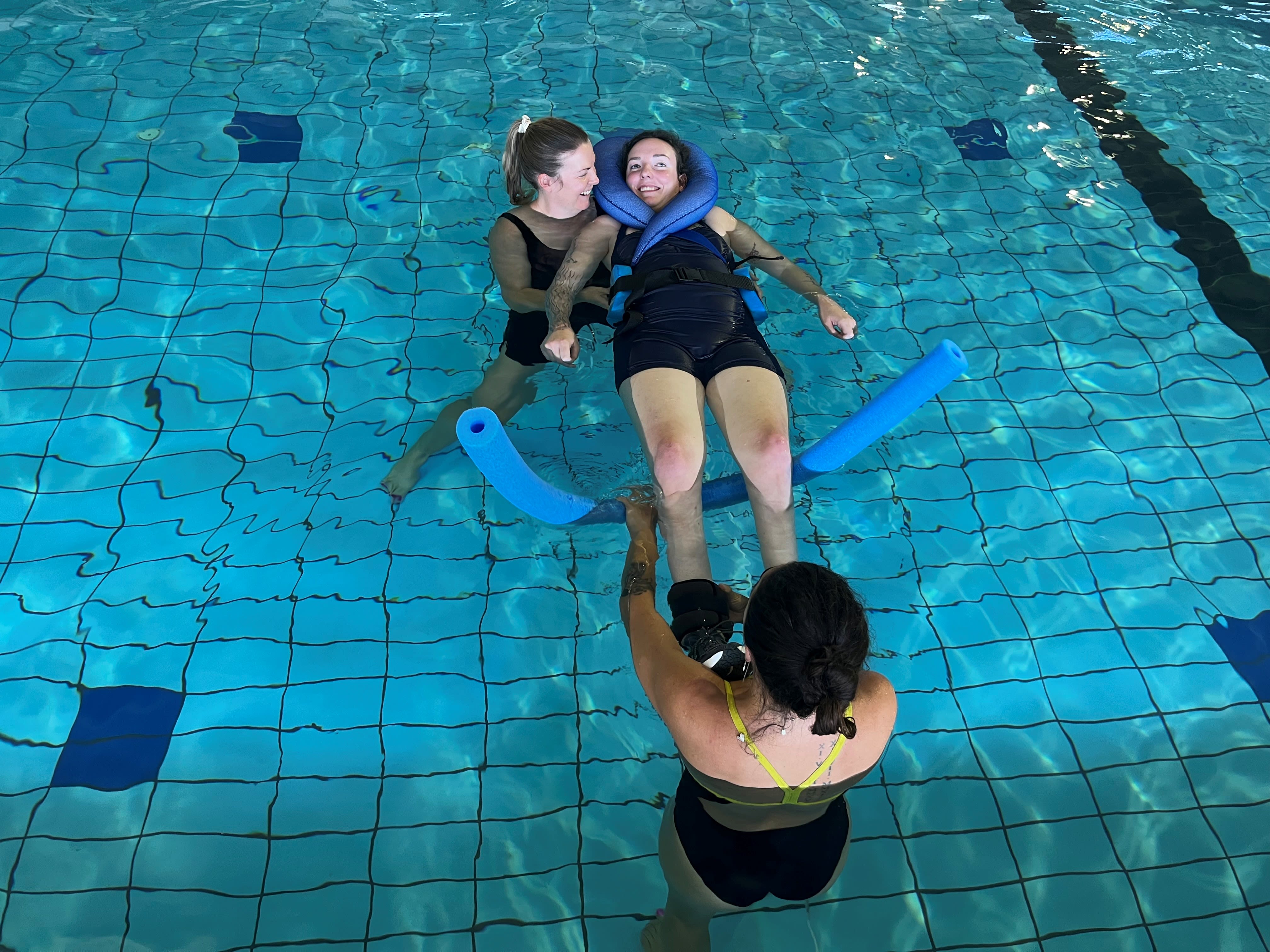 Jamie-Lee at a hydrotherapy appointment. Despite following up constantly with the companies, I still have to wait to access equipment. While my health suffers, I’m forced to be patient.I’m also waiting for my new power wheelchair which will be customised to my needs. My current chair doesn’t support my back enough due to the lack of padding, which is very painful for my advanced scoliosis. It also has inappropriate armrests which gives me cuts and bruises when I reposition myself. The new power wheelchair will be much more comfortable, and is also a lot easier for my support workers to manage. I trialled the chair six months ago, but it only just got approved by the NDIS. It took my sister over two years for her current power wheelchair to arrive. This makes me feel even more worried about when mine might be delivered. I don’t think it will be ready for at least another six months.
The Housing Hub currently lists over 5,500 homes for people with disability. Search for a home that is right for you today!Or better still, create a Housing Seeker Profile and let the Housing Hub do the hard work for you. Sign up here!

Last year, I had my NDIS funding for therapy cut by the agency. These therapies I do regularly are so important for my progressive condition.
I could no longer access my bi-weekly physiotherapy and hydrotherapy, fortnightly speech therapy and weekly exercise physiology. These therapies help me maintain strength and use different muscles that I’m not able to in a wheelchair.
Speech therapy helps my lung capacity, and not doing this leads to a downward spiral of my condition and a deterioration of my speaking ability. When my speech goes downhill, I find I can no longer speak to people on the phone with ease. When I’m at a shop or doing stand-up comedy, no one can understand me, which feels humiliating and isolating.
A Painful Wait
I’ve already had so much trouble getting the equipment I require in my Specialist Disability Accommodation (SDA), which is also an important factor for me to live well and as independently as I can. Jamie-Lee at a hydrotherapy appointment.
 The Health Impacts of Delays
There are big health impacts for me being without proper equipment and appropriate therapies. Last year, while being without a ceiling hoist for nearly five months, I lost a lot of strength and as a result, could not maintain my ability to stand in my standing frame or during transfers. I needed extra help for transfers and it took me about eight months to regain what I’d lost. My blog, The Importance of Assistive Tools (AT) to Live Independently, goes into detail about the repercussions of not having access to AT and therapies.The Outcomes
After waiting, I recently had my therapy funding reinstated. I asked my physiotherapist to write a supporting letter of recommendation explaining the benefits of physiotherapy twice a week, specifically for my condition – and other progressive issues – which have not worsened in the last twenty years with regular exercise. My support coordinator has helped me a lot, which showed me the importance of having a good support coordinator. The Housing Hub’s Home and Living Support Coordination team are a great resource to contact for advice and what next steps to take. The impacts of waiting for both decision appeals and essential equipment isn’t just a test of patience, it’s the difference between living well, or having your health and independence decline. I’m one of the lucky ones who is supported by NDIS funding. It makes me wonder how people get by without having timely access to the equipment they need, or while experiencing the long wait times to get the right funding or approvals from the NDIS.Article published: May 2026About The Author
Jamie-Lee loves to challenge stereotypes surrounding disability; her lived experience of growing up with a disability motivates her advocacy. Having studied journalism at university, she uses her writing skills to her advantage. She hopes to help other people with a disability along their journey, encouraging vulnerable people to find their voice. She believes that diversity will pave the way to equality for all.The Housing Hub currently lists over 5,500 homes for people with disability. Search for a home that is right for you today!Or better still, create a Housing Seeker Profile and let the Housing Hub do the hard work for you. Sign up here!
Browse Resources
Housing Seeker Profile
Creating a Housing Seeker Profile is a simple process which involves telling us what you are looking for and what is important to you.
Housing Roadmap
The Housing Hub has worked alongside people with disability to map out the stages of a housing journey and the information you need to know about when moving through each step.