Individualised Living Options (ILO) In Practice: A Scenario
Our Disability Housing Expert and contributor, Belinda Aitken, describes what a participant should consider when committing to an ILO arrangement with a hypothetical scenario. Individualised Living Options (ILO) is described by the NDIS as support to live the way that suits you, designed just for you, and does not fund a house.Catherine loved the idea. She felt safe with Jolene and knew Jolene could find the support workers she needed, which isn’t always easy. But before moving forward, they needed to make sure the arrangement would align with NDIS guidelines. Could a provider be an ILO host and also provide up to six hours of support per day?The quick answer to this is: Yes. Technically, the same provider can be the host and provide personal care support as part of an ILO agreement. There is nothing in the operational guidelines that would prevent this from happening.
 Article published: November 2025

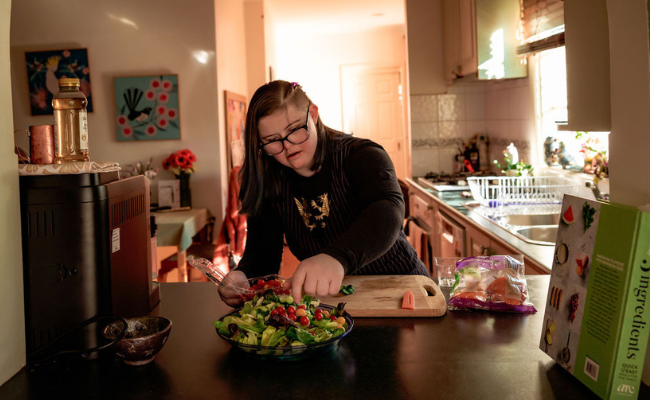
When you start thinking about Individualised Living Options, or ILOs, it can be a little bit hard to get your head around, because the possibilities are really endless. The NDIS itself says that no two ILOs will be the same.There are two most common types of ILOs – living with a host family, or living with supportive housemates – but even those arrangements will look different for every person.With lots of options, there are many things to think about. What do you want and need now, and what will you want and need in the future? Let's have a look at a possible scenario: Catherine is a woman in her 30s who has Down syndrome. Catherine lives in Newcastle. She was recently funded by the NDIS for an Individualised Living Option to help her live more independently in a way that suits her lifestyle and goals.Jolene is a team leader of support coordination at Princess Support Services. Over the years, Jolene had built a strong rapport with Catherine. When Catherine began exploring ILO options, Jolene proposed something unique: She offered to become Catherine’s ILO host and also coordinate the team that would provide Catherine with the daily support she needs.
 Individualised Living Options (ILO) is described by the NDIS as support to live the way that suits you, designed just for you, and does not fund a house.
But is it the best way to go?
Best practice in any home and living arrangement is to have different providers for each service in your NDIS plan. In this scenario, Catherine would end up having the same provider – Jolene – for her support coordination, her house arrangement and her supports. This puts Jolene and Princess Support Services in a position of power, as they would have control of all areas of Catherine’s life. Who would Catherine go to if she had an argument with Jolene and felt she could no longer live with her? She can’t go to her support coordinator for help to find a new ILO arrangement, because that’s Jolene. She can’t change support providers, because that’s Jolene as well.People with a disability should always have the option to move if the place they are living in doesn’t align with their needs. But equally, they shouldn’t have to move if where they are living works for them, but their supports aren’t suitable.Having different providers means you have a more unbiased network of support around you when you are exploring what is right for you. You do need to think about scenarios that might happen in the future, even if you think they won’t. Relationships can break down, so putting all your NDIS needs into one basket might seem easier, but could cause problems in the long run. Having different providers for your housing, supports and support coordination in an Individualised Living Options scenario not only gives you greater choice, it also ensures that you are the one with the bigger cut of the pie when it comes to your funding and life. Always be the one with the power.Need help securing ILO funding, or setting up your arrangement?
Housing Hub's Home & Living Support Coordination Service can support you on this journey. Enquire or refer todayPhone: 1300 322 013Email: specialists@housinghub.org.au
About the Author
Belinda worked as a Lived Experience Facilitator at Housing Hub since June 2020. She recently changed roles and is now a Disability Housing Expert, specialising in education.Belinda brings the experience of navigating her own housing journey which sees her now living in an SDA apartment, and has a Bachelor of Commerce from Deakin University.Belinda is passionate about people with disability having a voice and a say in their own housing journey, which will lead them to have the best support, choice and flexibility in how they live.
Browse Resources
Housing Seeker Profile
Creating a Housing Seeker Profile is a simple process which involves telling us what you are looking for and what is important to you.
Housing Roadmap
The Housing Hub has worked alongside people with disability to map out the stages of a housing journey and the information you need to know about when moving through each step.