The Repercussions of NDIS Funding Cuts
Jamie-Lee talks about her recent experience with NDIS funding cuts and how it has impacted her life.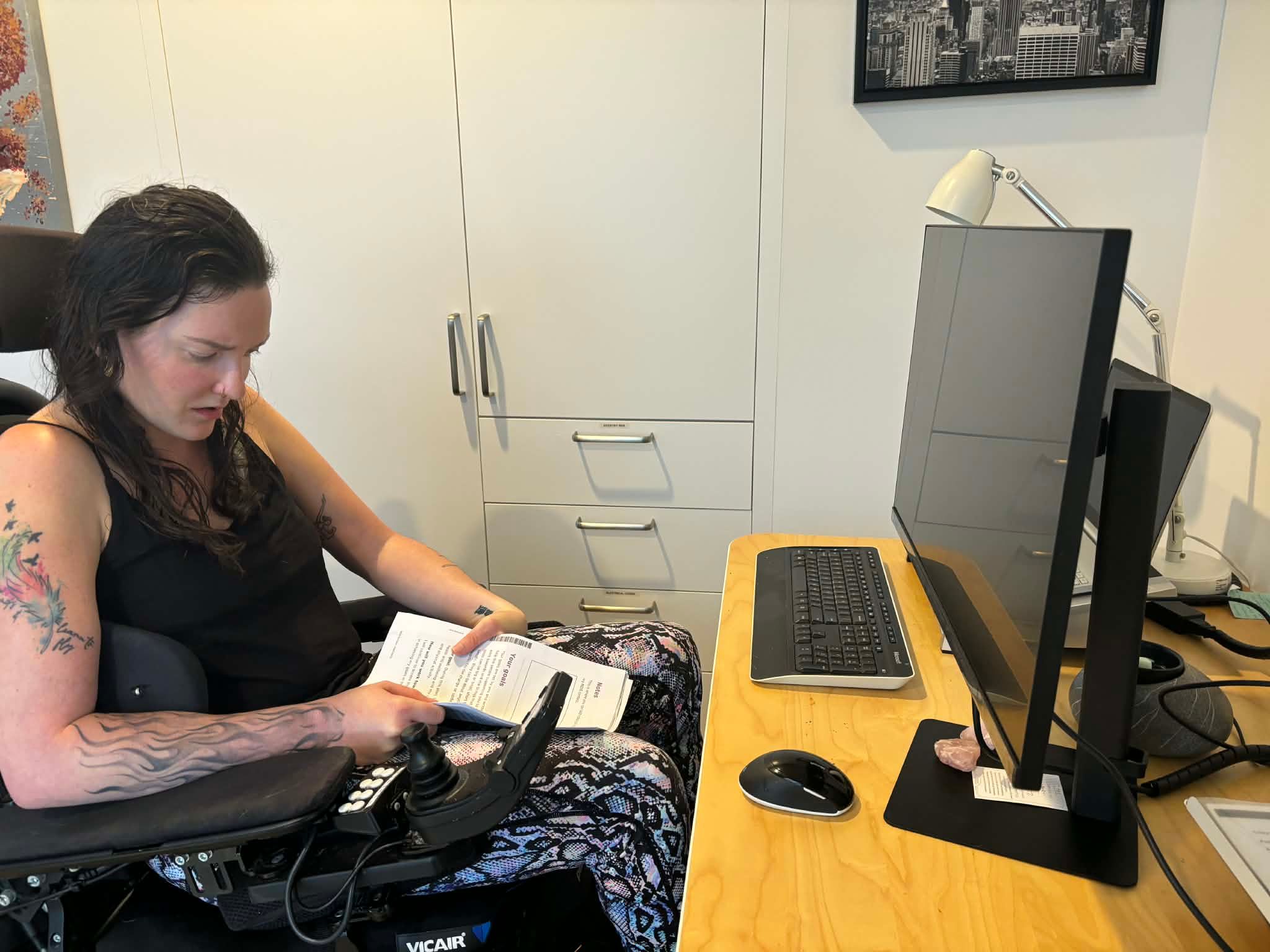 Jamie-Lee has experienced some negative repercussions from changes to the funding in her NDIS plan. Image: Disinfluencer
Article published: February 2026*This blog reflects current NDIS policy and legislation. Please note that these mentions may become incorrect as the NDIS changes.
The Housing Hub currently lists over 5,500 homes for people with disability. Search for a home that is right for you today!Or better still, create a Housing Seeker Profile and let the Housing Hub do the hard work for you. Sign up here!

I’ve accessed funding from the National Disability Insurance Scheme (NDIS) since it began in 2018, and I’ve seen a lot of changes over the years, but this latest round of funding cuts took me by surprise and has impacted me in a really personal way. Recently, I was unable to travel for work due to a lack of funding for two support workers to accompany me on the trip. I travelled last year for work and leisure with two support workers, so I didn’t think there would be any issues, but I was wrong. I require 24-hour support and concierge who assists when I need a 2-person transfer. But I’m not funded for two people when I go on respite.I have tried travelling with one support worker previously, and things always go wrong when someone is awake and working 24 hours a day.
 Jamie-Lee has experienced some negative repercussions from changes to the funding in her NDIS plan. Image: Disinfluencer
 The positives and negatives
I agree with some of the ways the NDIA are reducing spending, as I’m aware a lot of specialists charge NDIS participants more for their services. According to data from the NDIS, people with a disability have been paying ‘NDIS premiums’ for some therapies, while the same services are offered to able-bodied people at lower rates.There are positive and negative impacts for participants, as it means our funding is being safeguarded, but it also means we have to go through a lot of bureaucratic processes to receive the funding we need.NDIS plans were previously allocated on a yearly basis, which caused a risk of participants overspending. From 19th May 2025, changes were introduced to better manage budgets by changing funding periods to quarterly to decrease the risk of participants running out of funds. Personally, I find it a lot easier to manage budgets having quarterly plans.The 2025-26 Federal Budget predicts decreased spending on the NDIS for the second year in a row.It outlines that “$954 million less will be spent on the NDIS next year than previously forecast and $3.9 billion less will be spent over the next five years.”
What’s changed and the impacts
- According to Empowrd, plan management funding cuts result in decreased support from plan managers.
- Since 2019 there has been no increase to support coordination rates, which makes keeping businesses open more challenging.
- I’ve personally experienced cuts to therapy supports and now, can only do physiotherapy and exercise physiology once a week, instead of twice. This has impacted my health and well-being; I’ve noticed a deterioration in my strength as I cannot stand up in my frame anymore for long periods of time. My core strength has decreased as I can no longer stop myself from falling forward in my chair.
- Less funding for providers when travelling means providers will be less likely to visit remote areas.
Article published: February 2026*This blog reflects current NDIS policy and legislation. Please note that these mentions may become incorrect as the NDIS changes.
About The Author
Jamie-Lee loves to challenge stereotypes surrounding disability; her lived experience of growing up with a disability motivates her advocacy. Having studied journalism at university, she uses her writing skills to her advantage. She hopes to help other people with a disability along their journey, encouraging vulnerable people to find their voice. She believes that diversity will pave the way to equality for all.The Housing Hub currently lists over 5,500 homes for people with disability. Search for a home that is right for you today!Or better still, create a Housing Seeker Profile and let the Housing Hub do the hard work for you. Sign up here!
The Housing Hub has a free advice line about NDIS housing that operates Monday - Thursday, 10am - 3pm (AEST).Contact Us
- Phone: 1300 61 64 63
- Email: housingoptions@housinghub.org.au
- or send in an enquiry via our contact form.
- Understand NDIS home and living options
- Access information about home and living supports
- Receive information on the process to apply for NDIS home and living supports.
Browse Resources
Housing Seeker Profile
Creating a Housing Seeker Profile is a simple process which involves telling us what you are looking for and what is important to you.
Housing Roadmap
The Housing Hub has worked alongside people with disability to map out the stages of a housing journey and the information you need to know about when moving through each step.